Enstark Logo
Sheet Metal Bending Services

Sheet Metal Bending Services

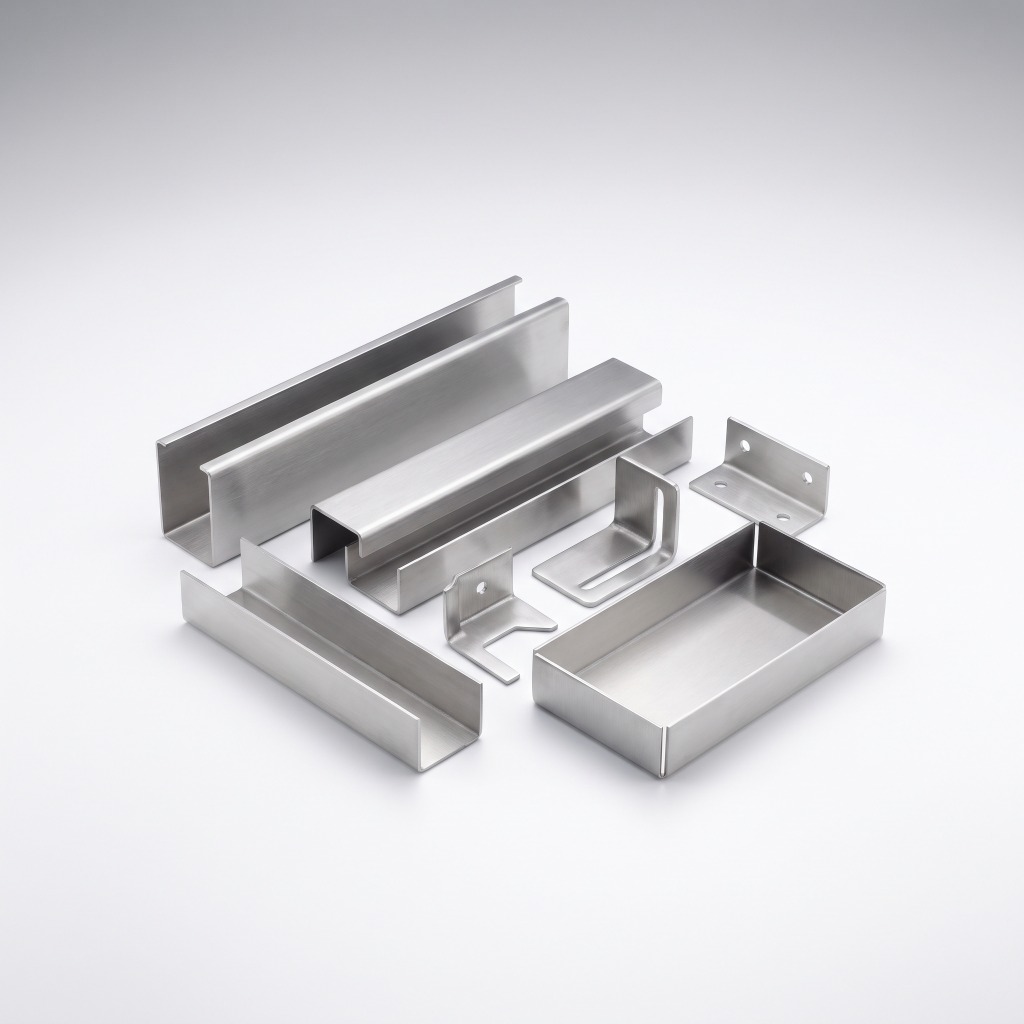
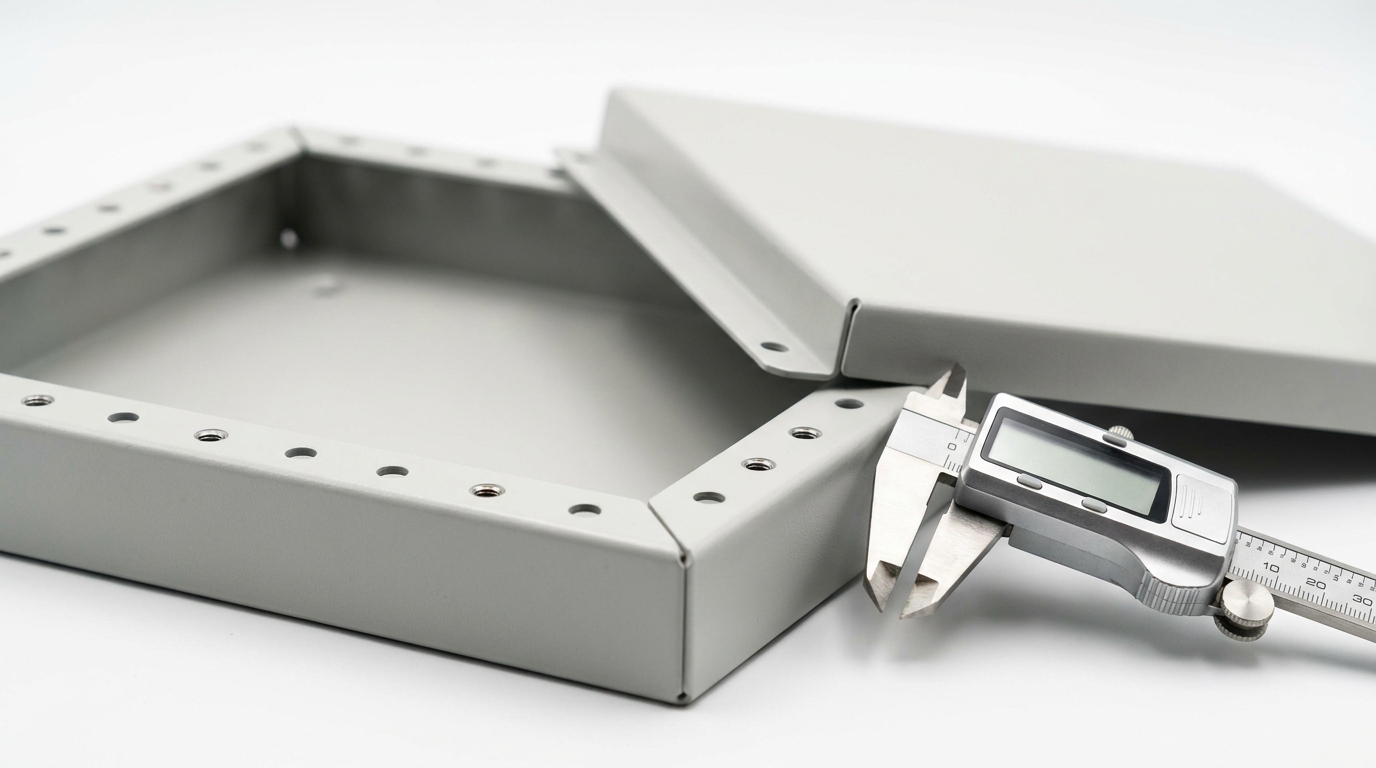
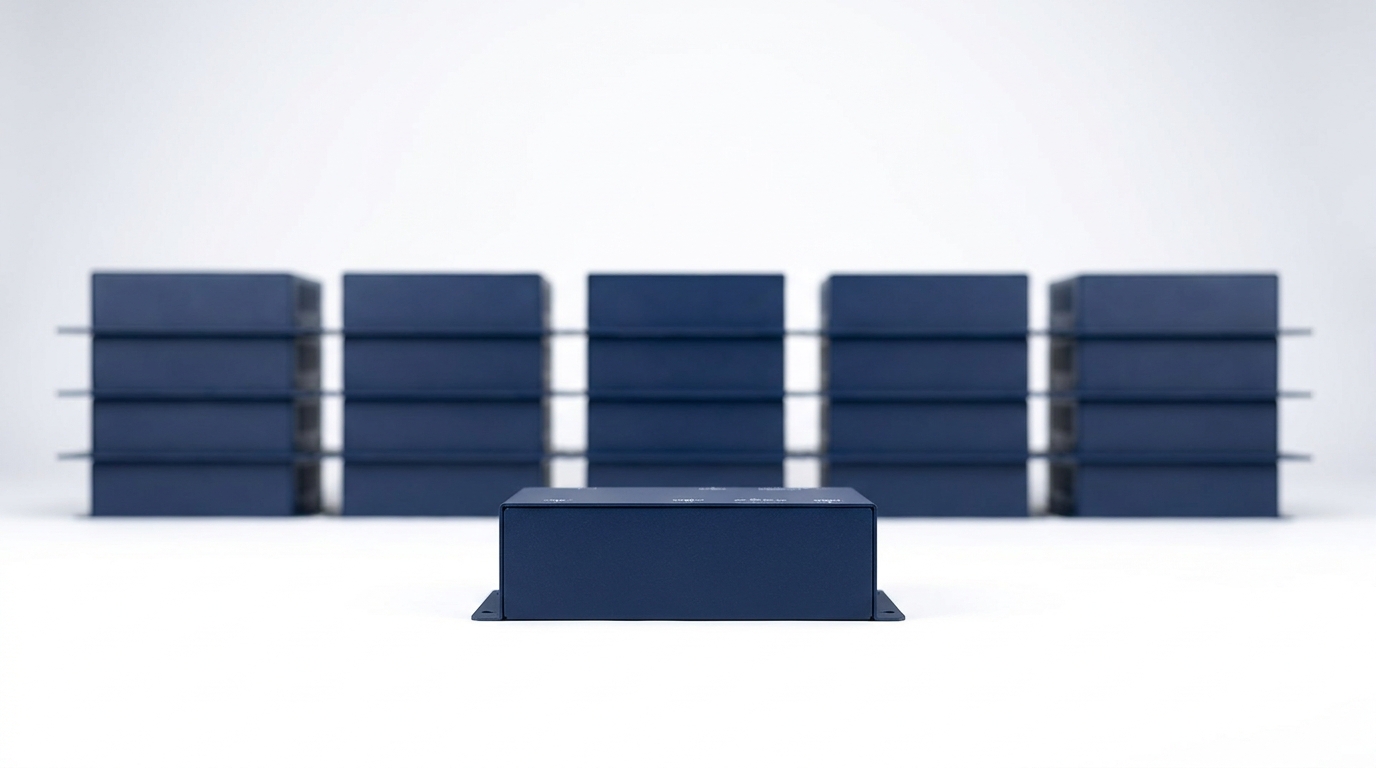
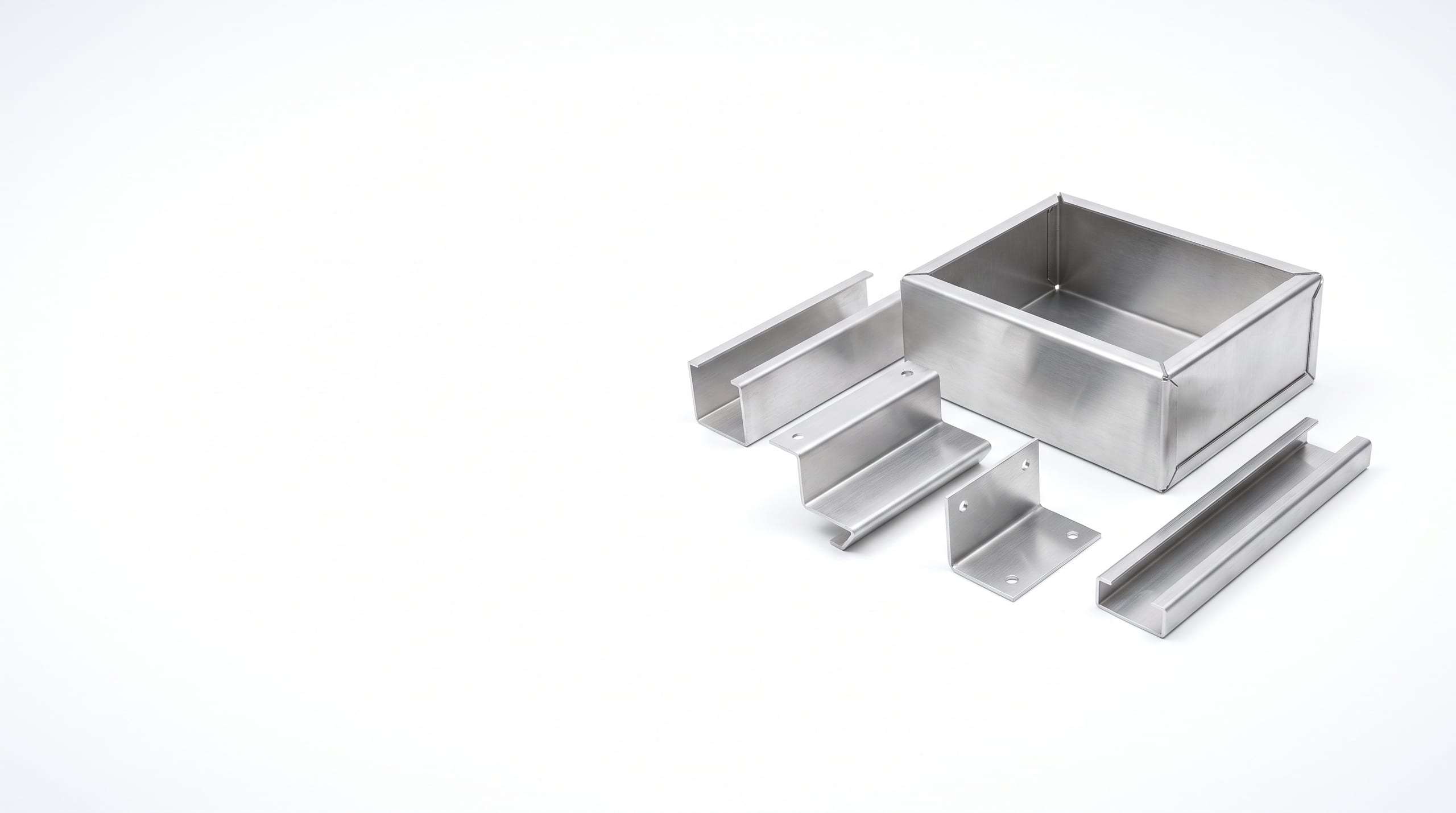
Enstark forms flat blanks into brackets, channels, boxes and enclosures on CNC press brakes. Every bend holds ±1° and repeats across the whole batch, from one prototype to thousands of parts.

✓
100,000+ Parts Made
✓
ISO 9001:2015 Certified
✓
Parts in 3–5 Days

Get an Instant Sheet Metal Bending Quote

Upload your CAD file for instant pricing and DFM feedback.

Drag & drop CAD files hereSTEP, STP, STL, IGS, IGES, PDF, ZIP — up to 15MB
No commitment required · DFM feedback included
Huawei Technologies
Samsung Electronics
Tata Motors
Delta Electronics
Lens Technology
Eveready Industries
Beijing Institute of Technology
Ansell LTD
NRTC
Chantelle
PT Wings Surya
PT Sun Paper Source
PT Supreme Paper Solution
Huawei Technologies
Samsung Electronics
Tata Motors
Delta Electronics
Lens Technology
Eveready Industries
Beijing Institute of Technology
Ansell LTD
NRTC
Chantelle
PT Wings Surya
PT Sun Paper Source
PT Supreme Paper Solution
Design Guide
Max dimension3000 mm bend length
Material Thickness0.5–6 mm
Tolerances±1° bend angle, ±0.254 mm bend-to-edge
Wall Thickness / Radius
1× material thickness min inside radius
Min Feature Size
4× material thickness minimum flange length
Surface Finish Options
As-bent, film-protected, deburred, brushed, powder coated, plated
Design advice
1/ Use one inside radius for all bendsKeeping the same radius across the part avoids secondary tool setups, reducing manufacturing costs and lead time.
2/ Add bend relief at cornersCut reliefs at least 1× thickness wide where flanges meet edges to prevent edge tearing and corner deformation.
3/ Keep holes clear of bend linesPlace holes at least 2.5× material thickness plus the bend radius away from bend lines to prevent oval distortion.

Bending Materials

Every metal bends differently. Our CNC press brakes apply calculated springback compensation for every alloy grade.
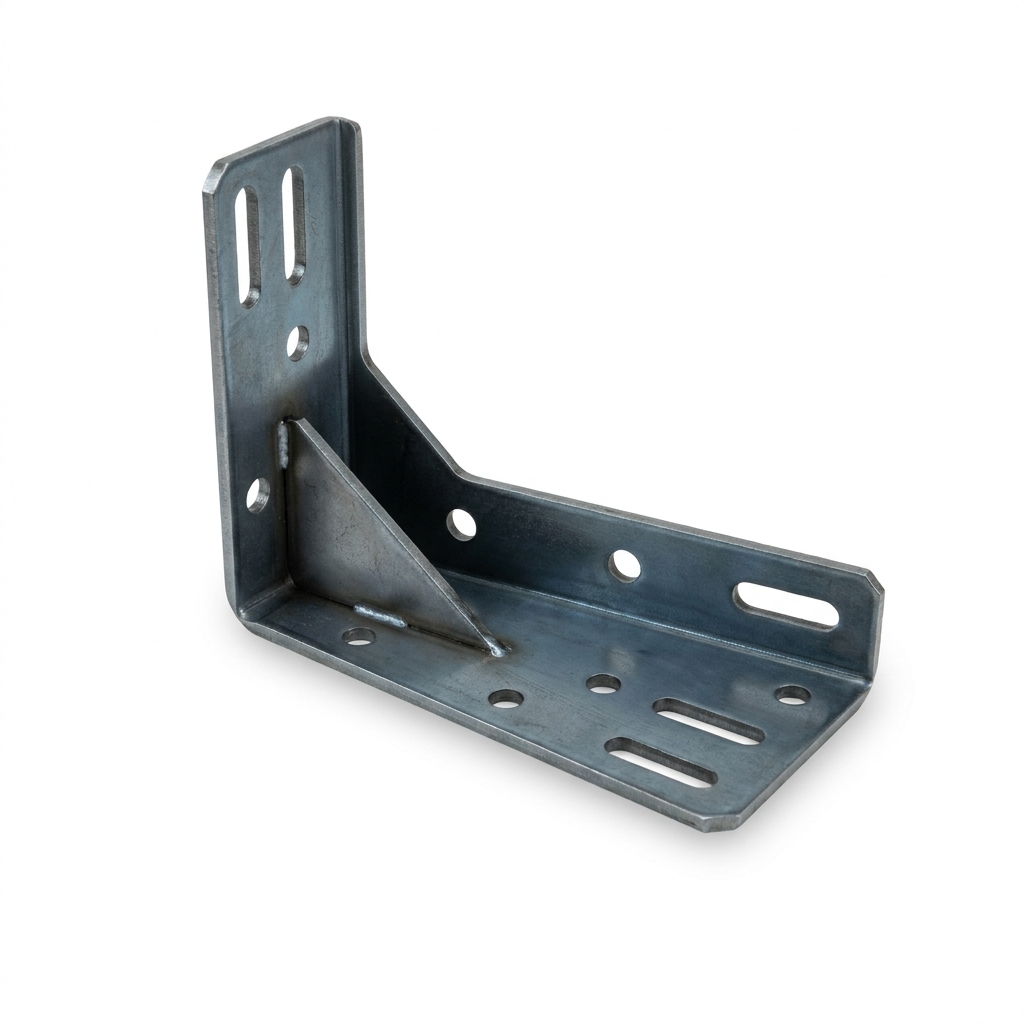

Aluminum 5052-H32
The premier sheet metal aluminum alloy. Outstanding ductility allows tight bend radii without cracking. Ideal for brackets, chassis, and electronics enclosures.
Silver
Appearance
$$
Price Rating
From 3 business days
Lead Time
Aluminum 5052-H32
Enstark operates fiber lasers, multi-axis CNC press brakes, turret punches, and robotic welding cells under one unified ISO 9001 quality system.Why Enstark for Sheet Metal BendingEvery file undergoes upfront DFM review to verify hole-to-edge spacing, bend allowances, and tooling clearances before production starts.
300+Sets of Machine
120+Countries Shipped
20k+Customers Served
Global Shipping World Map
Enstark Online Custom Sheet Metal Service SolutionsGet Quote
Laser Cutting/01
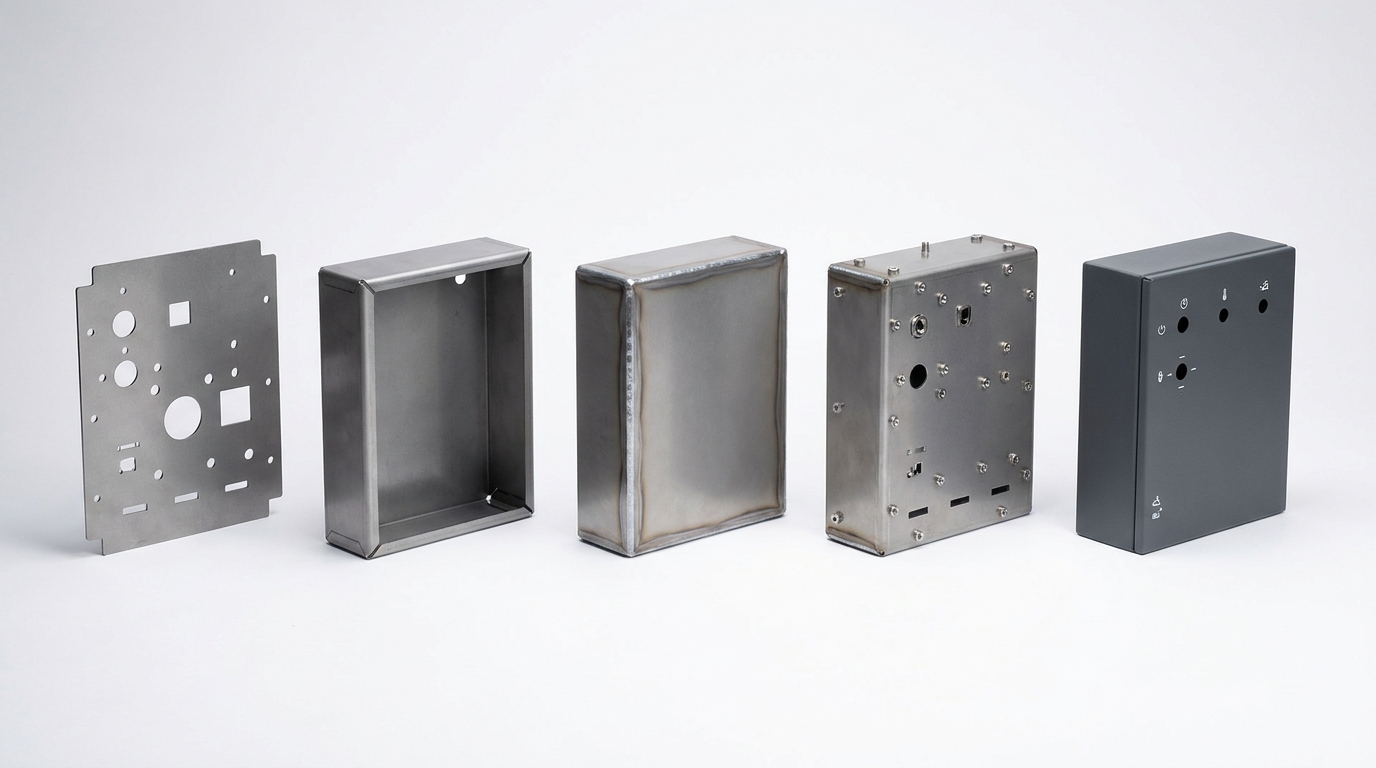
Every bent part begins as a precise laser-cut flat blank holding ±0.1 mm tolerances before moving to the press brake.
Laser Cutting Solution
Welding/02
Close formed corners, seal seams, and join mounting brackets into sturdy housings using TIG, MIG, and robotic spot welding.
CNC Bending
Sheet Metal Enclosures/03
Complete formed enclosures and chassis outfitted with PEM press-fit hardware, welded seams, and high-durability powder coating.
Sheet Metal Enclosures

Bent Part Post-Processing Capabilities

Post-forming surface treatments that eliminate tool marks, protect against oxidation, and apply aesthetic finishes.

Scroll horizontally to view finishes →
Finishing Process
Surface Roughness
Dimensional Change
Primary Application / Benefit
As-Bent (no finishing)
Raw sheet texture
None
Internal structural brackets and cost-sensitive assemblies
Protective Film Bending
Mark-free pristine sheet
None
Preserves cosmetic brush finish on aluminum and stainless panels
Deburring / Edge Breaking
Ra 1.6–3.2 µm on edges
−0.05 to −0.1 mm
Eliminates sharp corners and die burrs for safe handling
Brushing (Satin Finish)
Ra 0.4–1.2 µm
−0.01 to −0.02 mm
Uniform directional grain that conceals handling marks and light scratches
Powder Coating
Smooth or textured
+60 to +120 µm
Rugged, scratch-resistant coating in custom RAL/Pantone colors
Anodizing (Type II / III)
Ra 0.8–1.6 µm
+5 to +25 µm
Hard protective anodic layer with deep black or colored dye for aluminum
Zinc Plating
Ra 0.4–1.6 µm
+5 to +15 µm
Corrosion barrier with clear, yellow, or black hexavalent-free passivation

Why Choose Us

Engineers choose Enstark for formed parts that consistently hit target angles and assemble without force.

/01
High Quality Parts
Bend angles hold ±1° and flange dimensions hold ±0.254 mm. First-piece inspection with digital protractors and height gauges guarantees repeatability.
High Quality Parts
/02
Fast Lead Time
Standard formed brackets and channels ship in 3–5 business days. Extensive in-house punch and V-die libraries minimize setup time.
Fast Lead Time
/03
Engineering-Driven Support
We evaluate inside bend radii, flange length, and collision clearances during initial DFM review, resolving forming issues upfront.
Engineering-Driven Support

What is Sheet Metal Bending?

Sheet metal bending is a precision cold-forming process where a CNC press brake drives a hardened punch into a matching V-die, folding the sheet along a linear axis. The metal retains its gauge while gaining significant section modulus and rigidity.

✓ISO 9001 certified manufacturing quality
✓CNC press brakes up to 200 metric tons
✓±1° bend angle accuracy across parts
✓Forming lengths up to 3000 mm
✓Material-specific springback compensation algorithms
✓Mandatory first-piece inspection prior to batch runs

Pros and Cons of Sheet Metal Bending

Pros of Sheet Metal Bending

Fewer Parts & Welds

One formed piece replaces multiple joined components, eliminating assembly labor, cost, and weak weld seams.

High Strength-to-Weight

Flanges and formed ribs add structural rigidity, enabling thin sheet to carry loads that flat plates cannot.

Zero Custom Tooling Cost

Standard V-dies and punches accommodate almost all common bend geometries, avoiding expensive hard tooling.
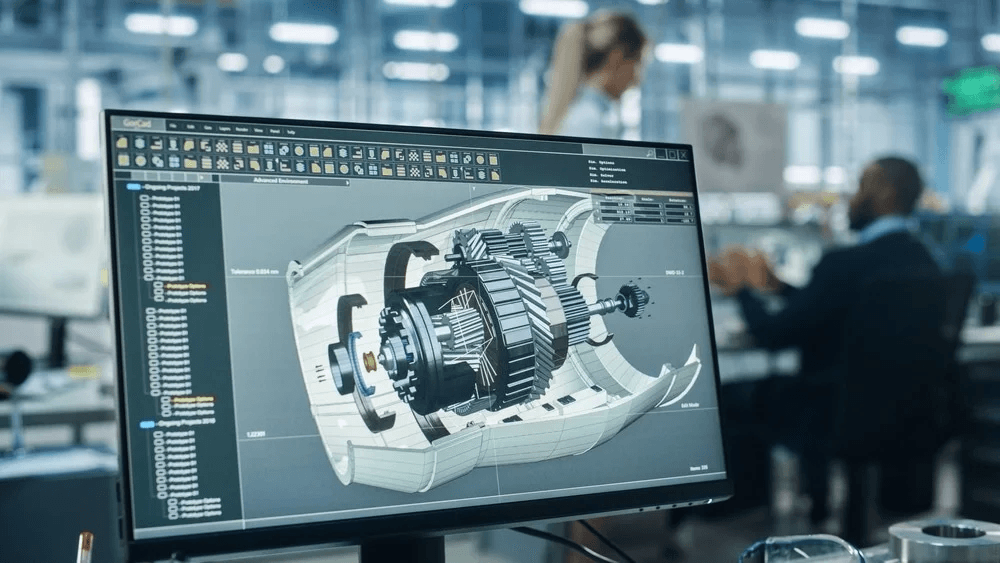
Sheet Metal Bending Process

Cons of Sheet Metal Bending

Material Springback

Metals partly flex back after pressure release; high-tensile stainless steel requires over-bending compensation.

Thickness & Radius Limits

Forming is best suited for gauges under 6 mm; harder metals require larger radii to avoid micro-cracking.

Straight Bends Only

Press brakes produce straight linear bends. Compound curves, spherical shapes, and deep draws require stamping dies.

frequently Asked Questions.
Frequently Asked Questions
What tolerance can you hold on bent parts?

We maintain ±1° on bend angles, ±0.254 mm (±0.010") bend-to-edge on a single surface, and ±0.2 mm hole-to-bend spacing. General tolerances adhere to ISO 2768-m.

What is the thickest sheet metal you can bend?
What is the minimum bend radius for sheet metal?
What is springback and how is it controlled?
What is the K-factor?
Which metal alloy is easiest to bend?
Will bending leave marks on my parts?
How much does sheet metal bending cost?

Sheet Metal Bending Technical Resources

View All Articles